
Going Grey Naturally: How to Transition Beautifully (Without the Awkward Stage)
June 15, 2026 • Color
For years the goal was to cover it. Every six weeks, back in the chair, chasing the new growth before anyone could see it. Then one day you catch yourself wondering what would happen if you just let it go. What if the silver coming in is actually beautiful? What if you stopped fighting it?
If that thought has crossed your mind, you are not alone, and you are not crazy. More women than ever are choosing to embrace their grey hair, and the results can be absolutely stunning. But there is one thing that stops most women before they even start. The awkward stage. That harsh line of demarcation where your colored ends meet your natural roots, the part everyone dreads when they think about going grey naturally.
Here is the good news. After more than 30 years behind the chair, I can tell you that the awkward stage is not something you have to white-knuckle through. With the right plan, the transition can be smooth, soft, and genuinely beautiful at every single step. Let me walk you through how we do it.
Why Going Grey Naturally Is Worth Considering
Let's be honest about what the color cycle actually costs you. Covering grey every few weeks is a real commitment of time and money, and as the grey comes in faster, that line shows up sooner and sooner. Many women reach a point where they feel like they are running on a treadmill that only speeds up.
Embracing your grey hair takes you off that treadmill. When it is done well, silver and salt-and-pepper hair reads as intentional, modern, and elegant, not as "letting yourself go." The key phrase there is done well. Going grey naturally is not the same as doing nothing. Doing nothing is exactly what creates the awkward stage everyone fears. A thoughtful silver hair transition is a service, with real technique behind it, and that is what makes the difference between looking polished and looking like you are halfway through growing something out.
The Real Problem: That Harsh Line of Demarcation
The thing that makes growing out grey feel so unbearable is the contrast. You have years of color on your mid-lengths and ends, often darker and warmer than your natural shade, and then a band of cool silver pushing up from the root. The eye goes straight to that line. It can take a year or more to grow color all the way out, and most women simply cannot stand to look at that stripe for that long. So they give up and go back to coloring.
This is the moment where the right stylist changes everything. Instead of waiting for nature to slowly erase the line, we break it up on purpose. We blur the boundary so your eye never lands on a hard edge. That is the whole secret, and it is the opposite of the grey coverage approach where the goal is to hide the silver entirely. Here, we are working with the silver instead of against it.
How a McKinney Color Specialist Makes the Transition Smooth
So how do we actually erase the awkward stage? It comes down to a few professional techniques that blend your grown-out grey with the colored hair so the change is gradual instead of abrupt. Here is the three-step plan I use with clients who want to transition beautifully.
Step One: The Consultation and the Honest Plan
Everything starts with a real conversation. I want to see how much natural grey you actually have, where it sits, your natural pattern of silver, and the condition of your previously colored hair. Some women have gorgeous bright silver at the temples and a softer salt-and-pepper through the back. Some are mostly grey already and just a few inches of color away from the finish line. Your starting point decides your path, and there is no single right answer.
During this step we set honest expectations. Depending on how dark your current color is, a full transition can take a few sessions spread over several months. I would rather tell you that up front than promise an overnight miracle, because a healthy, beautiful result is always worth the patience. This is the same careful, customized thinking that goes into any color correction work we do, and a grey transition really is a form of color correction.
Step Two: Blending With Highlights and Lowlights
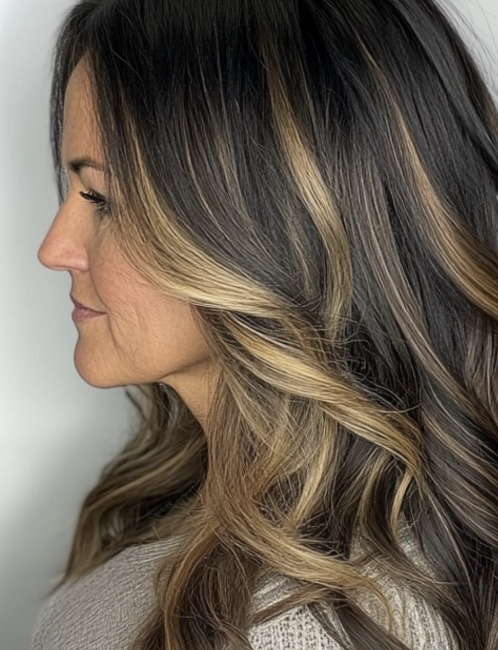
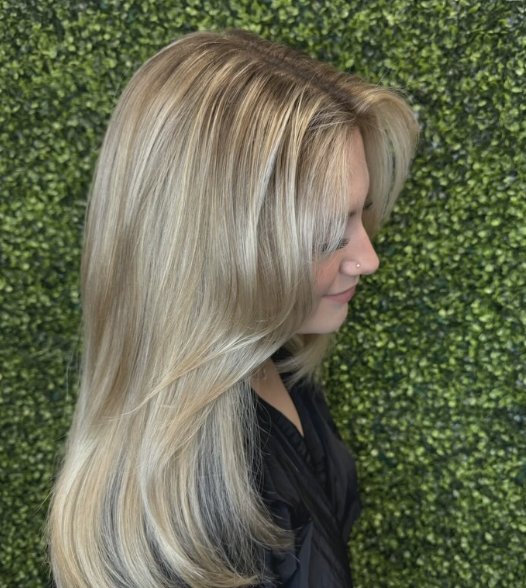
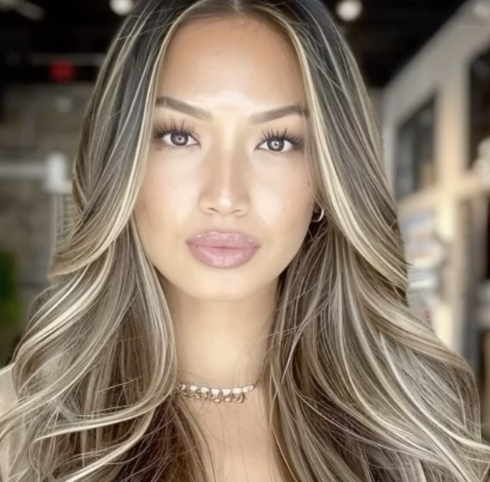
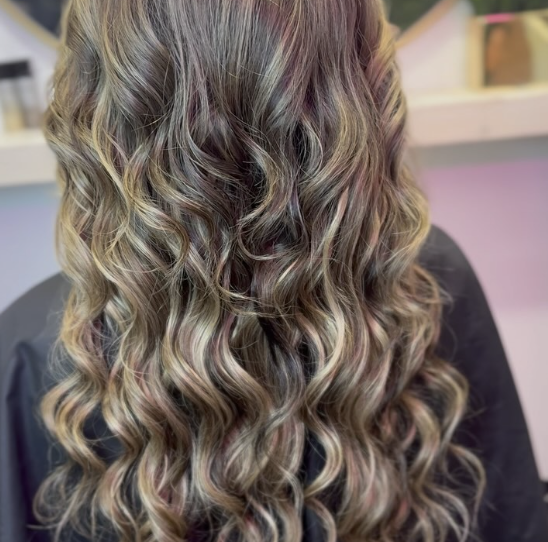
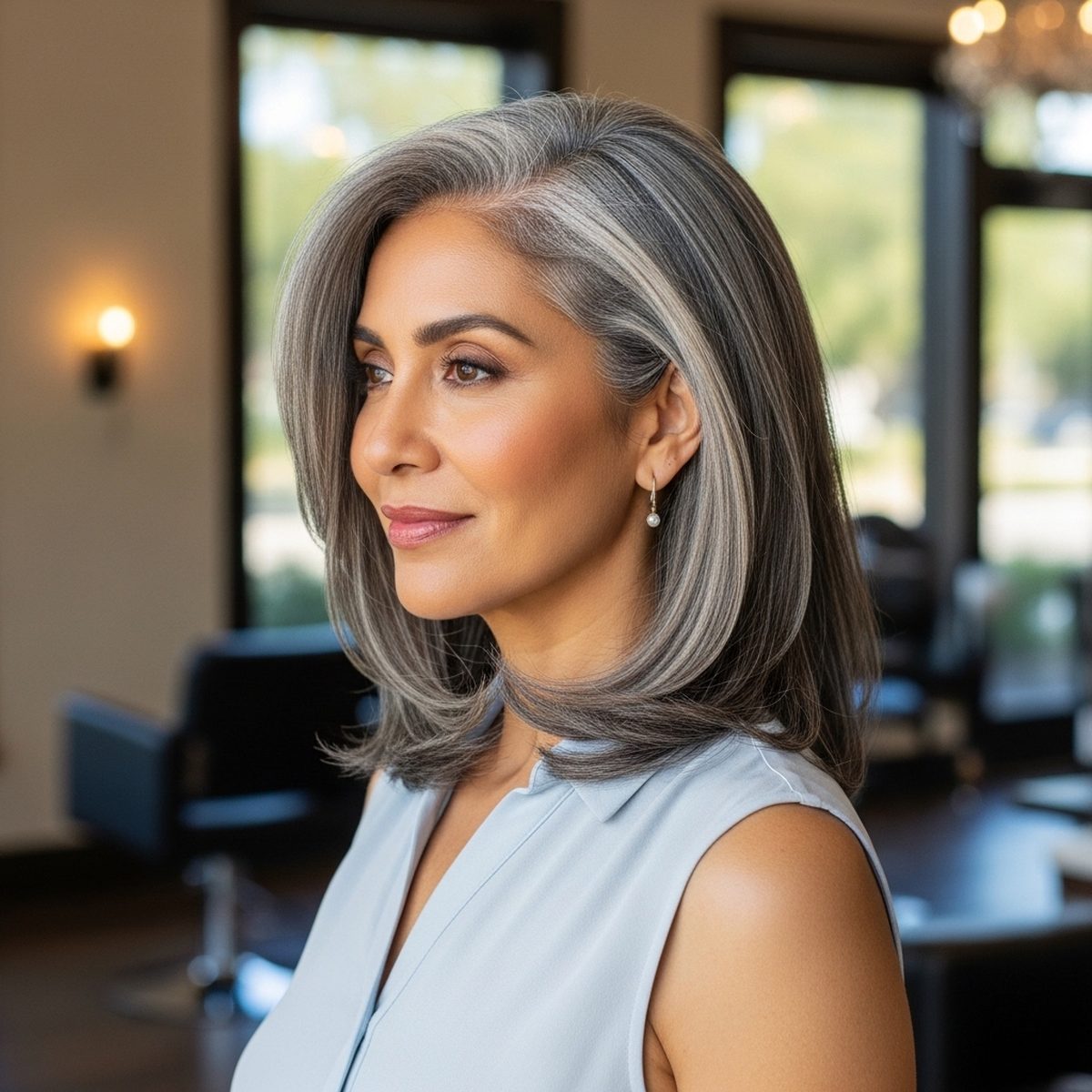
This is where the magic happens. Rather than chopping off all your color or sitting through an obvious grow-out, we weave in highlights and lowlights that mimic the tones of your natural grey. Soft silver and white highlights blended through your colored hair trick the eye into seeing dimension instead of a line. Strategic lowlights add depth so the result never looks flat or washed out.
This technique, sometimes called reverse balayage, gradually shifts your overall color toward your natural silver. Each appointment blends a little more, so you walk out looking finished and styled every single time, never caught mid-transition. If you want to understand more about how this dimensional approach works, my overview of highlights and lowlights explains the technique we are borrowing here.
Step Three: Toning and Caring for Your New Silver
Natural grey hair has its own personality, and it needs a little help to look its best. Silver and white strands can pick up yellow or brassy tones from minerals, heat, and product buildup, especially with our North Texas water. A good toning gloss neutralizes that warmth and gives your silver a clean, expensive-looking finish.
Grey hair also tends to feel coarser and drier than pigmented hair, so the right conditioning routine keeps it soft and shiny rather than wiry. I send every transition client home knowing exactly which products will keep their silver looking luminous between visits. That ongoing care is what separates grey hair that glows from grey hair that just looks faded.
What the Transition Looks Like Along the Way
I want to set your expectations honestly, because this is a journey and not a single appointment. In the early sessions, we are softening that line and introducing silver tones into your colored hair. By the middle of the process, the blend is so seamless that most people would never guess you are transitioning at all. They will just think you got a beautiful new dimensional color.
By the end, the last of your old color has either grown out or been blended away entirely, and what is left is your own natural silver, toned and cared for so it shines. The beauty of doing it this way is that you look great the entire time. There is no stretch where you hide under hats or dread the mirror. Every stage is a styled, intentional look.
What Happens If You Try to Do It Alone
I will always be honest with you about the stakes. The women who struggle most with going grey naturally are the ones who try to white-knuckle it on their own. They stop coloring, watch that hard line creep down for months, hate what they see, and end up either reaching for a box of dye in frustration or cutting off length they loved just to be rid of the colored ends.
Box color is especially risky here, because it deposits stubborn pigment that makes a future transition even harder to blend. If you have already gone down that road, do not panic. That is fixable, and it is exactly the kind of situation a color specialist handles all the time. The point is simply this. A little professional guidance turns a frustrating, drawn-out grow-out into a smooth and even enjoyable transformation.
You Get to Decide What Beautiful Looks Like
Here is what I love most about this whole conversation. Choosing to go grey is not about giving up on your hair. It is about deciding, on your own terms, that your natural silver is worth celebrating. When you transition the right way, you end up with hair that is lower maintenance, full of dimension, and unmistakably yours. You get your six weeks back, you stop chasing the root line, and you walk around with a color that no salon could have invented because it is genuinely you.
After three decades of helping women in McKinney love their hair, I can tell you that the women who make this leap with a real plan almost never look back. They feel free.
Ready to Embrace Your Silver?
If you are thinking about going grey naturally and you live in McKinney, Allen, Frisco, Plano, or Prosper, I would love to help you map out a transition that feels beautiful at every stage. Book a color consultation at Moxi Hair Studio, and let's build a plan that takes you to your natural silver without a single awkward stretch along the way.
Moxi Hair Studio is located at 6700 Alma Rd, Suite 101, in McKinney, TX. I serve clients from McKinney, Allen, Frisco, Plano, Prosper, and throughout Collin County. Book your consultation today.
Follow: @moxihairstudiodfw