
Are Hair Extensions Damaging? An Honest Answer From a Stylist
August 10, 2026 • Extensions
"Are hair extensions going to damage my hair?"
I hear this question almost every week, and it usually comes with a story behind it. Maybe a friend had a bad experience. Maybe her hair is already thinner than it used to be and she's scared to make it worse. Maybe she tried extensions once, somewhere else, and pulled them out herself in tears because her scalp hurt so much she couldn't sleep.
It's a fair question, and it deserves a real answer instead of a sales pitch. So here it is, straight from more than 30 years behind the chair: extensions themselves are not the problem. How they're installed, and how they're maintained afterward, is what determines whether your natural hair comes through the experience healthy or worse off than when you started.
That distinction matters, especially if you're already worried about thinning. Let's talk through what actually causes damage, what safe extensions look like, and how you can tell the difference before you ever sit in a chair.
The Honest Answer: It's Not Extensions, It's How They're Installed
I've been doing hair for over 30 years, and in that time I've seen extensions transform a client's confidence, and I've also seen the aftermath of a bad install walk through my door in tears. Both of those things are true, and the difference between them almost never comes down to the extensions themselves.
It comes down to placement, weight, and whether the person installing them actually assessed your hair before they started. Extensions that are too heavy for fine hair, placed too close to the hairline, or attached with too much tension will cause damage over time. That's just physics. Your natural hair can only support so much pull before it starts to break or the follicle itself gets stressed.
But extensions that are matched to your hair's actual density, placed with the right spacing, and maintained on schedule are a completely different story. I have clients who have worn extensions for years with hair that's healthier now than when they started, because the extensions took pressure off their own hair to "do it all" and gave it room to grow.
What Actually Causes Extension Damage
If you've been scared off extensions, it's worth knowing exactly what causes the problems you've heard about. In my experience, damage almost always traces back to one of these:
Too much weight for your natural hair. If your hair is fine or already thinning, and someone installs a full head of heavy extensions without adjusting for that, your natural hair is going to bear a load it wasn't built for. This is the single biggest cause of extension-related breakage I see.
Placement too close to the hairline or part. Extensions need room to sit without constant pulling on the same few strands. Rushed or careless placement concentrates tension in spots that simply can't take it.
Skipping the move-up appointments. As your natural hair grows, the attachment point moves further from your scalp. Left too long, that creates uneven weight distribution and tugging you'll feel every time you brush or style. This is one of the most common reasons extensions start to feel (and look) like a problem, and it's entirely preventable with a maintenance schedule.
DIY removal. I understand the instinct to just take them out if something feels wrong. But pulling or cutting extensions out yourself, especially bonded or fused methods, can take strands of your own hair with them. Removal should always be done by whoever installed them, using the right release method for that specific application.
No real consultation beforehand. If a stylist doesn't take the time to look closely at your hair's density, texture, and current health before recommending a method, they're guessing. And guessing is exactly how the wrong extensions end up on the wrong head of hair.
None of these are inherent to extensions as a category. They're all installation and maintenance issues, and every one of them is avoidable with the right approach.
My 3-Step Process for Safe Extensions
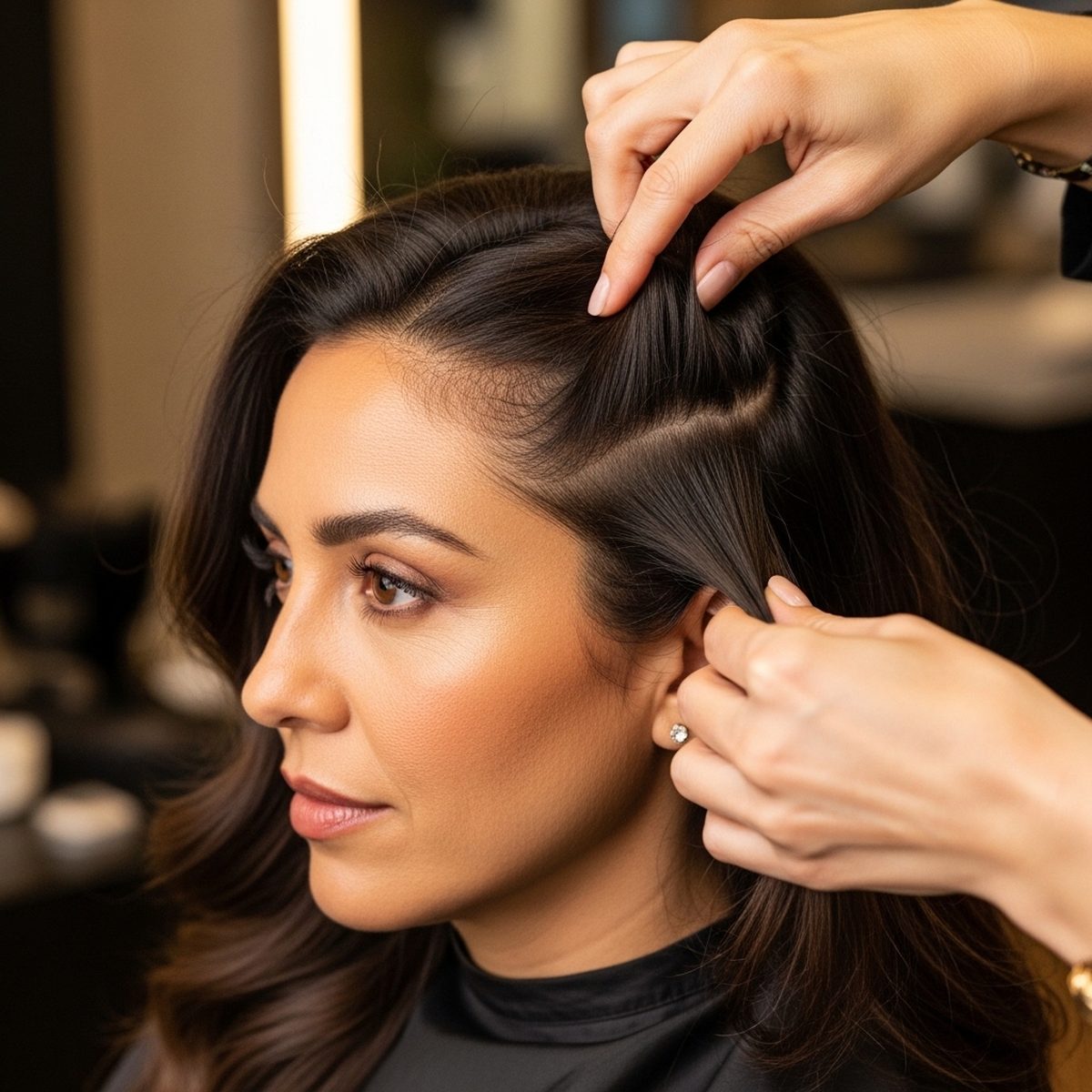
Step 1: A real consultation, every time. Before I recommend anything, I look at your natural hair density, your scalp health, and your goals. If your hair is already thinning, that changes what I recommend, not whether extensions are possible at all, but which method and how much weight your hair can safely support.
Step 2: A method matched to your hair, not a one-size-fits-all menu. I work with several extension methods, and the right one depends on your texture and lifestyle as much as your hair's current condition. For fine or thinning hair, that often means a lighter installation with fewer, better-placed pieces rather than maximum volume all at once.
Step 3: A maintenance schedule you actually stick to. Extensions need a move-up around 6 to 8 weeks after installation to stay close to your scalp as your hair grows. I walk every client through this schedule at their first appointment, along with exactly how to brush, wash, and sleep with extensions in a way that protects your natural hair underneath.
What Happens When Extensions Are Done Wrong
I want to be honest about the stakes here, because pretending there's no risk wouldn't be fair to you. Poorly installed or neglected extensions can cause real problems: traction alopecia from sustained pulling at the hairline, matting at the base that leads to breakage when it's finally combed out, and natural hair that comes out noticeably thinner once the extensions are removed.
This is exactly why the worry is valid. But it's also exactly why the solution isn't avoiding extensions altogether if length or volume is something you genuinely want. The solution is choosing someone who assesses your hair honestly, tells you if a method isn't right for you, and builds a maintenance plan you'll actually follow.
What Healthy, Long-Term Extension Wear Looks Like
When extensions are done right, they should feel like part of your hair, not a weight sitting on top of it. You should be able to run your fingers through your hair, put it up in a ponytail, and sleep normally without discomfort at the roots. Your natural hair underneath should keep growing, and at your regular move-up appointments, I should be able to show you that your scalp and hairline look healthy.
I've had clients come to me specifically because their hair had thinned from a bad installation somewhere else, and after a proper reassessment and a lighter, better-placed approach, they've been able to keep the length and volume they wanted without repeating that damage. If your hair is already fragile, sometimes the better first step is a strategic cut that adds the appearance of fullness on its own, and extensions can come later once your hair has had time to recover. I cover that approach in the best haircuts and styles for thinning hair.
If you're ready to explore whether extensions are right for your hair, my extensions guide on adding volume and thickness is a good next read, since a lot of the same clients worried about damage are also surprised extensions can help thinning hair look fuller, not just longer.
Let's Talk About Your Hair Honestly
You deserve a straight answer, not a rushed yes just to book the appointment. If you're considering extensions and you're worried about what they might do to hair that's already changed over the years, that worry is exactly what a real consultation is for.
At Moxi Hair Studio, I offer a free consultation before any extension installation. I'll look at your hair in person, tell you honestly whether extensions are a good fit, and walk you through the method and schedule that protects your natural hair while getting you the length and volume you're after. Explore my hair extension services or my haircut services to see the full range of options, and book your free consultation whenever you're ready.
Moxi Hair Studio is located at 6700 Alma Rd, Suite 101, in McKinney, TX. I serve clients from McKinney, Allen, Frisco, Plano, Prosper, and throughout Collin County. Book your consultation today.
Follow: @moxihairstudiodfw